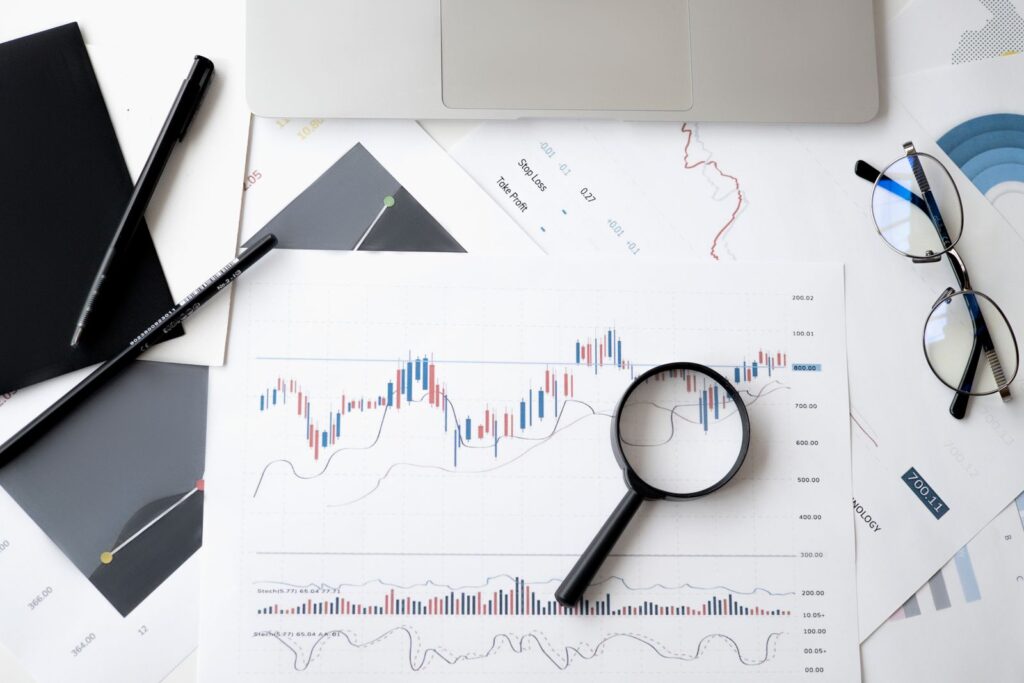
A futures trading platform is the software you place futures orders through, and picking one comes down to three things: which market you actually trade, what a round turn really costs once every fee is counted, and whether the platform has a simulator you will use before risking money. The advertised commission is the least useful number on the page.
The short answer: for CME futures, NinjaTrader, Tradovate and Plus500US are the common beginner picks, with commissions from about $0.39 to $1.50 per contract per side. For crypto futures, Bybit and Bitget both charge about 0.020% maker, with takers at 0.055% and 0.060%. Your order type costs more than your platform choice.
Updated November 2026. Some links here are affiliate links. If you sign up through them we may earn a commission at no extra cost to you. We only recommend tools we actually use. Futures are leveraged products and you can lose more than you expect.
First decide which futures you are trading
There are two separate worlds here and the platforms do not overlap. CME futures means exchange-listed contracts like the E-mini S&P (ES) and Nasdaq (NQ), traded through a US broker during defined sessions. Crypto futures usually means perpetual contracts on an exchange like Bybit or Bitget, trading around the clock with a funding rate.
Choosing the wrong world is the actual mistake people make. Everything below is split accordingly, and the same split runs through our guide to proprietary futures trading firms if you are going the funded route instead.
CME futures platforms and what they charge
Commissions are quoted per contract, per side. A round turn is two sides, so double every number below before comparing it to anything.
| Platform | Standard contract | Micro contract | Notes |
|---|---|---|---|
| Plus500US | n/a | From $0.49 | $10 minimum deposit, no data or platform fees |
| NinjaTrader / Tradovate (free plan) | $1.29 | $0.39 | Free plan, simulator included |
| NinjaTrader (paid, $99/mo) | $0.99 | $0.29 | Only worth it above a certain volume |
| Interactive Brokers | $0.25 to $0.85 | Figures roughly 200 days old, verify | |
| E*TRADE | n/a | $1.50 | Micro E-mini |
| Charles Schwab | $2.25 | thinkorswim, strong education and paper trading | |
NinjaTrader and Tradovate are the usual beginner recommendations, both with a free plan, free simulated trading, and browser plus mobile access. Interactive Brokers has the lowest headline rates and the steepest learning curve, so the saving only matters if you survive Trader Workstation.
That $99 a month NinjaTrader plan saves $0.30 per side on standard contracts. You need roughly 165 round turns a month before it pays for itself. Most beginners are nowhere near that and pay $99 for the privilege of feeling professional.
The commission is not the cost
This is the part that gets skipped everywhere. The per-contract commission you compare between brokers is the broker’s cut alone. On top of it sit exchange fees, regulatory fees, and at some brokers a clearing fee of around $0.10 per side, excluding top tiers. Data feeds and platform fees are separate again.
So a “$0.39 micro” is not $0.39. It is $0.39 plus clearing plus exchange plus regulatory, doubled for a round turn, before any data subscription. The gap between the cheapest and most expensive broker narrows considerably once all of it is counted, which is why chasing the lowest headline commission is usually a waste of a decision.
Ask any broker for the all-in cost of one round turn on the contract you actually trade. If they cannot answer plainly, that tells you something.
Crypto futures platforms and their fees
Crypto exchanges price differently, as a percentage of position value split into maker and taker. Maker means your limit order sits on the book and adds liquidity. Taker means your order crosses the spread and removes it.
| Bybit | Bitget | |
|---|---|---|
| Maker fee | 0.020% | 0.020% |
| Taker fee | 0.055% | 0.060% |
| Cost on a $100,000 taker order | About $55 | About $60 |
| Top VIP tier | 0% maker, about 0.03% taker | 0% maker, about 0.02% taker |
| Funding | Charged every 8 hours on perpetuals | |
On leverage the sources genuinely disagree. Some report up to 125x on majors at Bybit, others say both cap at 100x. Limits vary by pair and account tier, so check the live product page rather than any article, including this one.
Your order type costs more than your platform
Here is the arithmetic nobody puts in a platform comparison, and it is the most useful thing on this page.
Take a $100,000 position on Bybit. As a taker you pay about $55. As a maker you pay about $20. That is a $35 difference, on the same exchange, on the same trade, decided entirely by whether you used a market order or a resting limit order.
Now compare exchanges. Bybit taker at $55 against Bitget taker at $60 is a $5 difference.
Your order type is roughly seven times more expensive than your choice of exchange. People spend a fortnight comparing platforms and then click market order on every entry for the next two years. Learning to use limit orders will save you more than any platform switch, any VIP tier, and certainly more than any referral code.
That is not an argument against picking a good exchange. It is an argument about where your attention is worth spending. If you want the comparison anyway, we did it properly in Bybit vs Bitget vs WEEX.
What actually matters when choosing
| Check | Why |
|---|---|
| Simulator or demo | You should place a hundred practice orders before a real one. Free on NinjaTrader, Tradovate and most crypto exchanges |
| All-in round turn cost | Commission plus exchange, regulatory and clearing fees, doubled |
| Order types available | Bracket orders and trailing stops save more money than low commissions |
| Availability where you live | Several US futures brokers will not accept non-US residents. Check before you plan |
| Funding and withdrawal | Can you actually get money in and out from your country, and how fast |
| Charting | Most people end up on TradingView regardless of the execution platform |
That availability row matters more than it looks if you are outside the US. Most CME futures brokers in the table above are US-focused and several will decline non-US residents outright. Crypto futures exchanges are generally more accessible internationally, which is a practical reason, not an ideological one, that many readers end up there.
For crypto futures I use Bybit, mostly for depth on majors and the lower taker fee, with Bitget as the second account. Charts are TradingView either way. If you are starting from zero, best crypto exchanges for beginners covers account setup, and our Bybit review has the full breakdown.
When you should not open a futures account yet
- You have not used a simulator. Futures are leveraged. A hundred practice trades cost nothing and will change what you build
- You cannot state your maximum loss per trade in dollars. If that number does not exist, leverage will find it for you
- You are choosing on commission alone. The difference between brokers is cents. The difference between good and bad risk control is your account
- You only trade market orders. Fix that first, since it costs multiples of what your platform choice does
- You are outside the US looking at US brokers. Check acceptance before you spend a week on research
Frequently asked questions
What is the best futures trading platform for beginners?
NinjaTrader and Tradovate are the most commonly recommended for CME futures, both offering a free plan with free simulated trading and browser plus mobile access. For crypto futures, Bybit and Bitget both have demo modes. The best platform for a beginner is whichever one you will practise on first.
How much does futures trading cost per contract?
Broker commissions run from about $0.29 to $2.25 per contract per side, with micros at the lower end. That excludes exchange, regulatory and clearing fees, which can add around $0.10 per side or more. Double everything for a round turn, since commissions are quoted per side.
What is the difference between maker and taker fees?
A maker places a limit order that rests on the order book and adds liquidity. A taker places an order that crosses the spread and removes it. On Bybit, maker is 0.020% and taker 0.055%, so takers pay nearly three times more for the same position size.
Which is cheaper, Bybit or Bitget?
Marginally Bybit. Both charge about 0.020% maker, while Bybit’s taker fee is 0.055% against Bitget’s 0.060%. On a $100,000 taker order that is roughly $55 versus $60. The gap is small enough that order type matters far more than which of the two you choose.
Do I need a futures trading platform if I use a prop firm?
No, prop firms provide the platform as part of the funded account, usually a version of NinjaTrader, Tradovate or their own software. You are paying an evaluation fee rather than opening a brokerage account. The rules and drawdown terms matter more than the platform in that case.
Can I trade futures from outside the US?
Not easily with most US futures brokers, several of which decline non-US residents. Crypto futures exchanges are generally more accessible internationally, though they have their own country restrictions. Check acceptance for your country before investing time in platform research.
What leverage do crypto futures platforms offer?
Reports conflict. Some sources list up to 125x on major pairs at Bybit while others say both Bybit and Bitget cap at 100x. Limits vary by trading pair and account tier, so check the exchange’s live product page. High leverage is also how most beginners lose accounts.
Is a paid platform plan worth it?
Only at volume. NinjaTrader’s $99 monthly plan cuts standard commissions by about $0.30 per side, so you need roughly 165 round turns a month to break even. Below that you are paying for software you could use free.
What I would do
Pick the world first, CME or crypto, based on what you actually want to trade and whether brokers in that world accept you. Then open the free simulator and place a hundred orders before funding anything. Nobody does this, which is precisely why it works.
Then spend one afternoon learning limit orders properly. On the numbers above that single afternoon is worth about $35 per $100,000 traded, every time, forever. No platform comparison will ever hand you a return like that.
Come and ask in the free Telegram community if you want a second opinion on your setup before you fund it, and if you want someone to look at your risk plan properly, book a mentorship session.
The platform is a steering wheel. Useful, worth choosing carefully once, and completely irrelevant to whether you can drive.