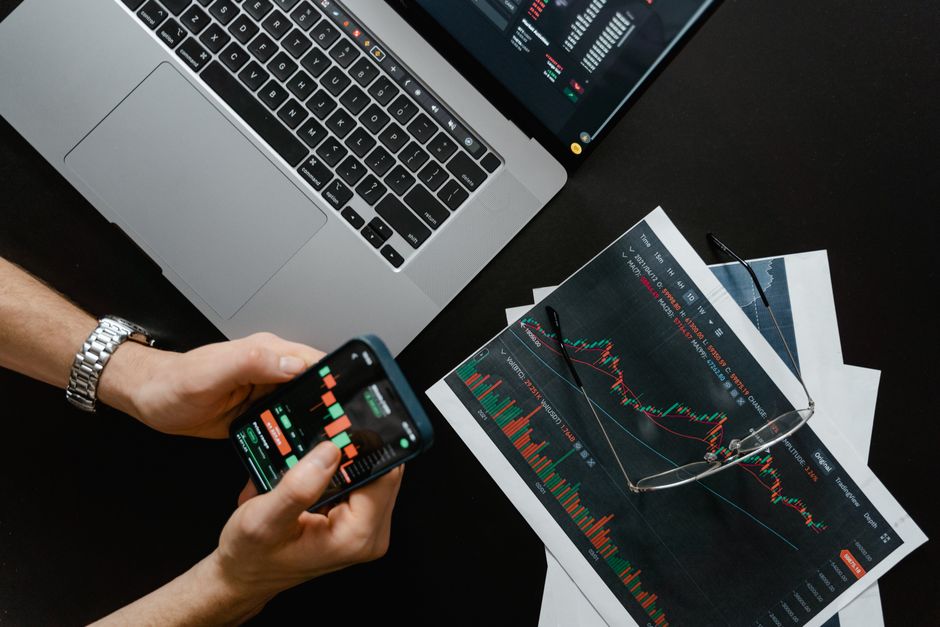
You make money trading forex in Kenya by opening an account with a CMA-licensed broker, funding it with M-Pesa, and trading one strategy with strict risk control on a small account. Forex is fully legal and regulated here by the Capital Markets Authority, so your job is not to find a secret, it is to build a skill. The honest version: 70 to 80 percent of retail traders lose money, and the ones who profit do it through discipline, not luck.
The short answer: Open an account with a CMA-regulated broker like Exness, fund it with M-Pesa, and trade one setup on the 15-minute chart risking 1 percent per trade. Realistic returns are 1 to 5 percent a month once you are consistent, not overnight riches. Practice on a demo account first.
Updated July 2026.
Some links here are affiliate links. If you sign up through them we may earn a commission at no extra cost to you. We only recommend tools we actually use.
Is forex trading legal in Kenya
Yes. Forex trading is legal and regulated in Kenya under the Capital Markets Authority, following the Capital Markets (Online Foreign Exchange Trading) Regulations of 2017. You can trade legally as long as you use a CMA-licensed broker. The CMA has repeatedly warned against offshore brokers, because if an unlicensed broker steals your money or manipulates prices, you have no legal recourse inside Kenya.
This is the single most important rule for a Kenyan trader. Use a broker that holds a CMA license. Exness, for example, operates as Exness (KE) Limited under CMA license number 162 as a non-dealing broker, and supports M-Pesa deposits. Regulation is not paperwork, it is the difference between a bad trade you can learn from and a scam you cannot recover from.
How much can a beginner realistically earn
A disciplined beginner in Kenya can aim for 1 to 5 percent of their account per month after two to four months of practice. On a $200 account that is $2 to $10 a month, which sounds small because it is. Professional traders target 1 to 3 percent monthly, not 1000 percent. Anyone showing you a screenshot of a tripled account in a week is selling a course, not trading.
The market here is real and growing. Kenya now has more than 100,000 forex traders, and regulated trading volumes jumped by over 80 percent after CMA licensing expanded, per TechTrends Kenya. That growth is why learning this properly is worth it. It also means more beginners are losing money faster than ever, so protect your capital first and chase profit second.
| Account size | Risk per trade (1%) | Realistic monthly range (1-5%) | Time to consistency |
|---|---|---|---|
| $100 | $1 | $1 to $5 | 3 to 4 months |
| $500 | $5 | $5 to $25 | 2 to 4 months |
| $1,000 | $10 | $10 to $50 | 2 to 4 months |
| $5,000 | $50 | $50 to $250 | 4 to 8 months |
Yes, the early numbers are humbling. That is the point. You grow the account by not blowing it, then compound. Forex is a slow game that punishes people in a hurry.
Which broker should you use to trade forex in Kenya
Use a CMA-licensed broker that accepts M-Pesa, has low minimums, and offers tight spreads. Exness is the common pick because it holds a CMA license, supports instant M-Pesa deposits and withdrawals, and lets you start with as little as $10. Pair it with TradingView for cleaner charts and alerts. Avoid any broker that cannot show you a CMA license number.
| What to check | Why it matters | What good looks like |
|---|---|---|
| CMA license | Legal recourse if things go wrong | A verifiable license number (Exness: 162) |
| M-Pesa support | Instant, cheap funding in shillings | Deposit and withdraw via M-Pesa |
| Minimum deposit | Lets you start small while learning | $10 or less |
| Demo account | Practice without risking real money | Free, unlimited demo |
New to trading entirely? Read our trading guide and the honest forex guide for Nigeria, which teaches a different strategy you can add to your toolkit.
Ready to start? Exness is CMA-licensed, funds with M-Pesa, and runs promotions that change often. Open an account and check the current welcome offer before you deposit.
How to start trading forex in Kenya, step by step
You need a CMA-licensed broker account, a funded balance, a chart, and one strategy. Here is the full loop from signing up to withdrawing profit back to M-Pesa. Do the first three steps on a demo account before you risk a single shilling of real money.
- Sign up. Create an Exness account with your email and phone, then verify your identity with your Kenyan ID. This unlocks M-Pesa funding and withdrawals.
- Fund with M-Pesa. Choose M-Pesa as your deposit method, enter the amount in shillings, and confirm the STK push on your phone. The balance shows in USD, usually within minutes.
- Open a demo first. Practice the strategy below on a demo account for two weeks. Log every trade. Only switch to real money once you are consistently green on demo.
- Open the chart. Load EUR/USD or GBP/USD on the 15-minute timeframe. Mark the day’s key support and resistance levels. Add RSI (14) and a 50 EMA. TradingView makes this cleaner than most broker charts.
- Place the trade. Follow the break-and-retest rules below. Set your entry, stop-loss, and take-profit before you click, not after.
- Withdraw profit. Withdraw back to M-Pesa weekly. Do not let a good week ride until it turns into a bad one. Profit you never take out is just a number.
The break-and-retest scalp, taught step by step
Break-and-retest is a clean 15-minute strategy: price breaks through a key level, comes back to touch it, and you enter when it bounces off that old level in the new direction. A broken resistance becomes support, and a broken support becomes resistance. You trade the retest, not the breakout, because the retest gives you a tight stop and a clear invalidation point.
The exact rules:
- Timeframe: 15-minute chart, EUR/USD or GBP/USD (tight spreads, clean moves).
- Best window: the London session, roughly 11am to 3pm East Africa Time, when these pairs move most.
- Tools: horizontal support and resistance levels, RSI (14), and a 50 EMA for trend direction.
- Setup: price breaks above a clear resistance with a strong candle, then pulls back to retest that level from above.
- Entry: buy when a 15-minute candle closes bullish off the retested level, with RSI holding above 50 and price above the 50 EMA.
- Stop-loss: just below the retest low, around 15 to 25 pips.
- Take-profit: the next resistance level, aiming for at least twice your risk.
- Risk: 1 percent of your account per trade. No exceptions, no revenge trades after a loss.
A worked example. Say EUR/USD breaks above 1.0850 resistance with a strong candle, then drifts back down and touches 1.0850. A 15-minute candle closes bullish at 1.0855, RSI is at 55, and price sits above the 50 EMA. You buy at 1.0855. Your stop goes at 1.0835 (20 pips, below the retest low) and your target at 1.0895 (40 pips, twice the risk). On a $1,000 account risking 1 percent, that is $10 at risk to make about $20, using a position size near 0.05 lots. Win two like that, lose one, and you are still ahead. Small edge, repeated, protected by the stop.
| Trade element | Level | Distance | On a $1,000 account |
|---|---|---|---|
| Entry (long) | 1.0855 | – | – |
| Stop-loss | 1.0835 | 20 pips | -$10 (1% risk) |
| Take-profit | 1.0895 | 40 pips | +$20 (2R) |
Trade this on a demo for two weeks and log every trade. If your win rate stays above 45 percent at 2R, you have an edge worth real money. If not, you just learned that for free instead of paying the market for the lesson.
Want to trade this live? Exness is CMA-licensed and funds instantly with M-Pesa, and the welcome offer changes regularly. Open an account, grab the current bonus, and practice on demo first.
Common ways Kenyans lose money in forex
Most Kenyan beginners lose money the same handful of ways, and all of them are avoidable. Knowing them is half the battle, because you cannot fix a mistake you do not see coming.
| Mistake | What it looks like | The fix |
|---|---|---|
| Over-leverage | Using 1:1000 to bet big, one move wipes the account | Risk 1% per trade, ignore max leverage |
| No stop-loss | Holding a loser hoping it comes back | Set a hard stop before every entry |
| Signal groups | Paying for signals, copying blindly | Learn one strategy you understand |
| Offshore brokers | Chasing bonuses from unlicensed brokers | Stick to CMA-licensed brokers only |
| Revenge trading | Doubling down after a loss to get even | Walk away after two losses in a day |
When this is not for you
Forex trading is not for you if you cannot afford to lose the money you put in. It is high-risk, and most beginners lose at the start. It is also not for you if you want guaranteed income, if you plan to trade with a loan or rent money, or if you cannot sit through a losing streak without panicking. There is no shame in that. A steady income plus a low-cost index fund beats blowing your savings on 1:1000 leverage every single time.
If someone has promised you fixed daily returns from forex, that is not trading, that is a scam. Learn to spot the difference with our guide on how to spot a Ponzi scheme before you hand anyone your money.
A quick reality check on risk
Real forex has no fixed daily return, no guaranteed profit, and no “deposit and watch it grow” button. Between 70 and 80 percent of retail traders lose money, and the ones who survive do it by risking small and cutting losses fast. The break-and-retest edge above only works because the stop-loss caps every loss. Skip the stop and one bad trade erases a month of good ones. Risk 1 percent, use the stop, withdraw profit, and treat this like a skill you build over months.
Want to learn alongside other Kenyan traders? Join the free Telegram community where we share setups and talk through trades. It is free, and it beats trading alone at 2am wondering if you are the only one.
Frequently asked questions
Is forex trading legal in Kenya?
Yes. Forex trading is legal and regulated in Kenya by the Capital Markets Authority under the 2017 Online Foreign Exchange Trading Regulations. You must use a CMA-licensed broker to trade legally and safely. The CMA warns against unlicensed offshore brokers because you have no legal protection if they cheat you.
How much money do I need to start forex trading in Kenya?
You can start with as little as $10 on brokers like Exness, but $200 to $500 gives your 1 percent risk enough room to matter. Start small while you learn on a demo account, then scale up slowly once you are consistently profitable across at least 30 logged trades.
Can I fund my forex account with M-Pesa?
Yes. Most brokers serving Kenya, including CMA-licensed Exness, accept M-Pesa for both deposits and withdrawals. You choose M-Pesa as the payment method, confirm the STK push on your phone, and the funds usually reflect within minutes. It is the most popular funding method among Kenyan traders.
How much do forex traders make in Kenya?
Realistic monthly returns for a consistent trader are 1 to 5 percent of their account, and professionals target 1 to 3 percent. On a small account that is a modest amount in shillings. Most beginners lose money at first, so anyone promising fixed high returns is not being honest with you.
Which is the best forex broker in Kenya?
The best broker is one that holds a CMA license, supports M-Pesa, has a low minimum deposit, and offers a free demo. Exness is a common choice because it meets all four and is CMA-licensed. Always verify the license number yourself rather than trusting a marketing claim.
Can I lose all my money trading forex?
Yes, especially with high leverage or no stop-loss. That is why the rule is 1 percent risk per trade and a hard stop on every position. Never trade with borrowed money or funds you need for rent, and a bad streak stays a lesson rather than a disaster.
The honest sign-off
Forex is legal in Kenya, M-Pesa makes funding easy, and one simple strategy plus tight risk control is genuinely enough to start. What it will not give you is a shortcut. If you read this whole guide, you already take this more seriously than the person who joined a signals group and deposited their salary the same night. Use that head start. Open a demo, log 30 trades, and let the numbers, not the hype, decide whether you scale.